Thursday, May 23, 2013

The Fearless Passage of Steven Kim by Carl Herzig & Steven Kim

click here to buy on Amazon.com
Steven Kim, a naturalized US citizen originally from South Korea, lived the life of a highly successful New York businessman. Along with his wife, Helen, he built several furniture businesses, all averaging worth in the millions. When a business deal sent Steven to China, he met four people who would change his life. Two were a pastor and his wife, who would lead him to Christ. Two others were refugees from North Korea, seeking the help of the church. Steven wouldn't idly sit back and watch these two men struggle. Nor would he just pray for their well-being, blessing and safety. He put his faith into action. Before his arrest, Steven would successfully smuggle over 48 North Korean refugees through China into South Korea. Even in prison, Steven, as a modern-day Joseph, worked for the Lord. This beautiful story of the Active, Committed Christian life is sadly rare, and greatly inspiring.

CAUTION: the plight of unsuccessful refugees is plainly stated, and prison conditions are accurately described; this could be a bit much for the "tender" reader.

It is time for a FIRST Wild Card Tour book review! If you wish to join the FIRST blog alliance, just click the button. We are a group of reviewers who tour Christian books. A Wild Card post includes a brief bio of the author and a full chapter from each book toured. The reason it is called a FIRST Wild Card Tour is that you never know if the book will be fiction, non~fiction, for young, or for old...or for somewhere in between! Enjoy your free peek into the book!

You never know when I might play a wild card on you!


Today's Wild Card author is:


and the book:

Whitaker House (March 14, 2013)

***Special thanks to Cathy Hickling for sending me a review copy.***

ABOUT THE AUTHOR:


Seung-Whan (Steven) Kim is a South Korean/American businessman and leading human rights advocate described by ABC news as "a face and a voice on behalf of suffering North Koreans." After serving four years in a Chinese prison camp for rescuing North Korean refugees, Kim returned to the U. S. and founded 318 Partners, a humanitarian organization that continues the work he began, focusing especially on the plight of trafficked North Korean women and children being sold into the sex trade. Kim and his wife are the parents of three grown children and live in Huntington, New York.

Carl Herzig, PhD, is a professor of English at St. Ambrose University where he teaches sacred poetry, contemporary fiction, and creative writing. He is a fellow of the National Writing Project and reviewer for a variety of literary and creative arts journals. Dr. Herzig has served as an Iowa Humanities Scholar and evaluator for the Hearst Foundation U.S. Senate Youth Program, the Iowa Humanities Board, and the Illinois Council for the Humanities.


Visit the authors'  website.


SHORT BOOK DESCRIPTION:

Seung-Whan (Steven) Kim was a successful but self-absorbed businessman living the American dream as a South Korean-turned-American citizen when he felt God calling him to intervene on behalf of North Korean refugees. In 2003 Kim was arrested in China for harboring and helping refugees escape through an underground railroad. He would serve four years in prison camps where his faith flourished despite the harsh environment. Immersing himself in Scripture and prayer, he secretly lead fellow inmates and their guard to Christ at great personal risk. Today Kim's refugee mission continues and he's known as a powerful voice for human rights, especially North Korean women and children being trafficked for profit. The Fearless Passage of Steven Kim serves as an inspiring reminder of what God can accomplish through one willing and obedient heart.


Product Details:
List Price: $12.99
Paperback: 192 pages
Publisher: Whitaker House (March 14, 2013)
Language: English
ISBN-10: 160374729X
ISBN-13: 978-1603747295


AND NOW...THE FIRST CHAPTER:


New York

Saturday, May 31, 1975


“Your beginnings will seem humble, so prosperous will your future be.”
—Job 8:7


Though already twenty-seven, Steven Kim felt like an excited teen as he stepped onto the tarmac at New York’s Kennedy Airport. His heart was bursting with an overwhelming sense of possibility, his head swimming with American-Dream visions of unbridled prosperity. He knew some English, if not as much as he thought, and crossed to the terminal with every assurance that a bright future awaited him around the first corner.

Steven had dreamed of this moment for almost twenty years, ever since he and his classmates in South Korea had studied English as a second language in middle school. For him, the United States had always been a nation of salvation; a champion-state of equality, individualism, and democracy; a bastion of both personal and political freedom. In the late 1960s, he had gone so far as to volunteer to fight alongside American forces in Vietnam.

And the U.S. was a mostly Christian nation, Steven knew. There would even be Korean churches like the ones he’d grown up with back home, established by Korean immigrants generations before, in the early the twentieth century. In South Korea, the number of churches was increasing dramatically, and there were already more Korean Christians than there were adherents to any of the country’s other religions. By this point, Steven figured, there must be tens of thousands of Korean Christians in America, and plenty of churches in New York from which to choose.

Most important for Steven, the American flag had become for him, as it had for Koreans in every walk of life, a banner of unlimited economic promise and business opportunity. For them, the U.S. was the place to go if you wanted to become rich. Wages were higher across the board, even at the lowest level, and one’s earnings, he believed, in the tradition of Horatio Alger, were in direct proportion to how hard you were willing to work. It was simple ingwa ŭngbo, cause and effect, based on initiative and poram, worthiness. The U.S. economy was less vulnerable to market fluctuations than Korea’s, and, in stark contrast to Korea’s highly politicized atmosphere, family and political connections in the U.S. were not always required for commercial success. All one needed, Steven thought, were initiative and a willingness to work hard—and he was chock-full of both.

The long path that had brought him to America hadn’t been easy, though. He’d been born Kim Seung-Whan to Korean parents in Seoul, South Korea, in 1949, just a year before the outbreak of the Korean War, and had grown up in a world full of violence, poverty, and hunger.

Seung-Whan’s father, Kim Ki-Hong, was from Sineuju, a lumber town on the northwestern border across the Yalu River from China, and had spent his youth in the town of Sariwon. After high school, Ki-Hong went to Japan to study photography, and he later moved to China and opened a studio in Beijing, where he lived for over ten years, earning a respectable income as a well-regarded photographer.

During the Second World War, Ki-Hong joined the Chinese Army to fight the Japanese, whose brutal, genocidal occupation of Korea had lasted thirty-five years, since 1910. When the war ended, he was still relatively young, and his army service earned him the freedom of travel. He chose to return to his “liberated” homeland in the north.

Ki-Hong arrived in Sariwon expecting to help build a new, free Korean society. With the 1945 division of the once-unified country at the 38th parallel, however, he found that one occupying force—the Japanese—had been replaced by another: the Soviets. Conditions were just as repressive as they had been under Japanese rule, in some ways even worse. Many of the Soviet soldiers stationed in North Korea had been criminals and prisoners. Now, disdainful of what they saw as a subhuman foreign populace and free to act on even their grossest desires, they rampaged through the towns and countryside, taking what they liked; raping women and young girls, often in front of their parents, husbands, and children; and pillaging family homes and property. Anyone who protested their behavior was mercilessly beaten or executed on the spot.

Ki-Hong had never considered himself a communist or espoused an overtly political position, but neither had he been averse to the philosophy. Now, however, his hatred of the occupation forces caused him to despise all communists, and he did so with a vengeance, not making a distinction between Soviets and Chinese. He helped organize an underground resistance group called Young Friends against Soviet Soldiers, comprised mostly young North Koreans, whose goal was to protect the citizenry and fight against the new army of foreign invaders. Every night, they went out into the streets to search out isolated Soviet soldiers to kill and confiscate their weapons.

Ki-Hong was one of the leaders of the emerging grassroots resistance, but his position was difficult to keep secret. Other members of the community became aware of his role, and within months, an infiltrator in the Young Friends exposed him publicly and informed the Soviets of his identity. Suddenly Ki-Hong was on the run, a wanted man, facing sure execution if apprehended. Only with the help of a few trusted friends was he was able to disappear, eluding the search and, in 1946, escaping to South Korea.

When he arrived in Seoul, Ki-Hong sought out like-minded activists. Still filled with hatred for the Soviets in the north, he searched for the most anti-communist group he could find and eventually joined the influential West-North Youth League.

As he had in the north, Ki-Hong helped direct the anti-communist campaign. But he no longer needed to conduct his activities underground, since he had the support of the South Korean government. He and his fellow activists searched the country for communist sympathizers and North Korean agents. Eventually, his role was formalized, and after the war he joined the South Korean police. Now it was his job to arrest communists and send them to prison. Fluent in Korean, Chinese, and Japanese, he soon rose to the rank of detective, and he remained there until his retirement.

Ki-Hong soon met and married a South Korean woman, Hong Do-Won. And on April 17, 1949, in Seoul, the couple celebrated the birth of their first child, a son, named Seung-Whan.

One of Seung-Whan’s few early or happy memories of his father was riding on the back of his motorcycle down a dusty city street. But Ki-Hong never really committed to either his wife or his child. They rarely ate or enjoyed activities as a trio, and the family didn’t hold together for very long. In 1956, when Steven was six, his father left to live with another woman.

For the next six years, until Ki-Hong returned for good, Do-Won was without her husband or the benefits of his income; he didn’t send them anything or stay in touch. As a single mother without other means of support, she was forced to work long hours in the nearby textile mills to keep herself and her son housed, clothed, and fed.

Ki-Hong’s mother, Grandma Hong In-Sung, remained a part of their lives. A proud woman of strong Christian faith, she looked after Seung-Whan’s religious upbringing, taking him to church and Sunday school every week. When he was sick, or pretending to be, he might miss school, but he never missed church; his grandmother would go so far as to carry him there on her back, if she had to. After the war, he later remembered, she would always iron paper money for him to place in the offering basket, even when times were lean.

Despite the witness of Grandma In-Sung, church was more a social opportunity than a spiritual experience for Seung-Whan. He had been born into a Christian family and had attended worship services for as long as he could remember, so he didn’t feel as if there was anything more for him to learn; he just practiced without thinking. Unlike the many South Koreans who converted to Christianity during and after the war, Seung-Whan was hardly conscious of the tenets of his faith; being a Christian was just like being a member of a family, in his eyes—a birthright, not a belief. His converted friends had to learn about who Jesus was and what He had taught—for them, a whole new philosophy—but Seung-Whan never really thought about those things. They were automatic, routine.

“I didn’t know Jesus Christ personally,” he said years later. “‘Jesus Christ—oh yeah, I believe in Jesus Christ,’ I always said, but inside I didn’t really know who He was.”

At age fifteen, Seung-Whan sang in the church choir and helped teach Sunday school, but he wasn’t moved by the services or inspired by the knowledge the ministers passed down; he didn’t feel anything inside. As he grew older, he continued to tithe money to the church, but in his life outside, he did whatever he wanted, not treating Sundays—let alone any other day of the week—as God’s.

Like all South Korean children, Seung-Whan learned English in school and developed a steadfast belief in “the land of the free.” He pushed himself hard in his lessons and made friends with American officers serving as volunteer teachers. To him, the United States was both a land of opportunity and a refuge from communist oppression.

In the early 1960s, when the Vietnam conflict had expanded into a full-fledged battle between the U.S.-supported South Vietnamese government and the communist north, South Korea provided the second-largest contingent of foreign troops. Never having left Korea, Seung-Whan was desperate to see the world, but no one could travel abroad without fulfilling his compulsory military duty. And so, immediately upon graduating, Seung-Whan enlisted with the Korean army, along with 320,000 of his compatriots.

Despite having grown up in a war-torn land, his youthful exuberance blinded him to the dangers of fighting. As luck would have it, he landed a job in the Educational Department of the 36th Regiment of the South Korean Army’s Operational Command Post, where he was tasked with preparing annual education timetables for the entire regiment. Although he was safe in his position, he was restless; he wanted to fight. Four times he applied for a transfer to combat duty, hoping to join the American forces on the ground in Vietnam. His job was vital to the regiment, though, and not everyone had the ability do it, so none of his four applications were supported or forwarded by his commanding officer. Seung-Whan was destined to serve his nation from the peaceful security of operational headquarters.

Upon completion of his term of duty, Seung-Whan returned to civilian life and decided that he wanted to go back to school. He’d always excelled in academics, and he knew that a degree could serve as a gateway to a more fulfilling life. To his disappointment, however, he wasn’t able to afford the tuition, nor could he obtain a scholarship to help cover the expenses. So, he accepted a paid position as tour director with church-run cultural youth group.

Seung-Whan enjoyed his job coordinating appearances for the young performers, and it satisfied his appetite for travel, but it still wasn’t what he was looking for in terms of a career. He wanted to succeed financially—to earn “real” money. This, he decided, should be his main focus. And so, after considering the best places in the world to launch a prosperous career, he weighed his options and turned his attention to his capitalist dreamland: the United States.

When Seung-Whan arrived in New York, the Korean and Vietnam wars were over, the last of the American troops having been lifted out of the chaos of Saigon just weeks earlier. The world was entering a new, modern age, based on the evidence all around him, and New York would be the center of global commerce—it was the place to be. He could hardly believe his good fortune as he set foot on U.S. soil for the first time. He had even adopted an English name to fit his new identity—Steven Kim. And he felt sure that nothing could hold him back.

Steven’s most pressing challenge was money—he was practically broke. With just a few bills in his pocket and not a penny more to his name, he needed to find a job immediately, that very day. Whatever work he could find, he told himself—whatever he was offered—he would do. I’ll do anything, he decided as he passed through customs. If I don’t work, I’ll die.

Fortunately, Steven had a contact—a high school friend who had come to the States a few years before and, like so many other Korean immigrants in New York since the beginning of the 1970s, opened a fresh produce store.

In 1960, only around four hundred Koreans lived in New York City, many of them students at Columbia University. By the end of the decade, however, Koreans had become the fastest-growing ethnic group of small-business owners in America’s largest metropolitan area.

Early on, the Koreans mostly sold wigs and other Korean-made goods or subcontracted in the garment industry. Then, first in the poorer minority neighborhoods of Brooklyn, Queens, and the Bronx, Koreans began buying up grocery stores from their American owners, who were retiring at an increasing rate. They also set up shop in vacant, abandoned buildings. Many of these entrepreneurs had come from Korea with experience managing or working in small retail outfits. Now, grocery stores, produce shops, and fruit stands owned and run by recent immigrants from Korea were sprouting up weekly on almost every block and street corner in the residential districts of Manhattan. Some of these businesses operated around the clock seven days a week to take full advantage of the “City That Never Sleeps.”

Without question, Steven was ready and willing to do his part. Before the sun had set on his first day in New York, he had a job selling fruit and vegetables in his family friend’s produce shop in Massapequa, on Long Island, just an hour’s train ride east of Manhattan.

The next morning, the owner walked Steven through the shop, pointing out bins and crates brimming with unfamiliar produce. “What’s this long green thing?” Steven asked in Korean. “What do you call that red one?” He was practically bursting with questions and nervous enthusiasm. He could barely wait to start.

“You have your work cut out for you,” the owner said. And he was right. But Steven didn’t mind hard work. Neither did he mind getting up before dawn to prepare the store for opening, nor staying late into the night, long after the last of the evening customers had returned home, to shut it down. He quickly learned almost all of the hundreds of names for the fruits and vegetables for sale in America, and it didn’t take long for his English to improve enough for him to converse comfortably with Korean and American customers alike.

Friday, May 17, 2013

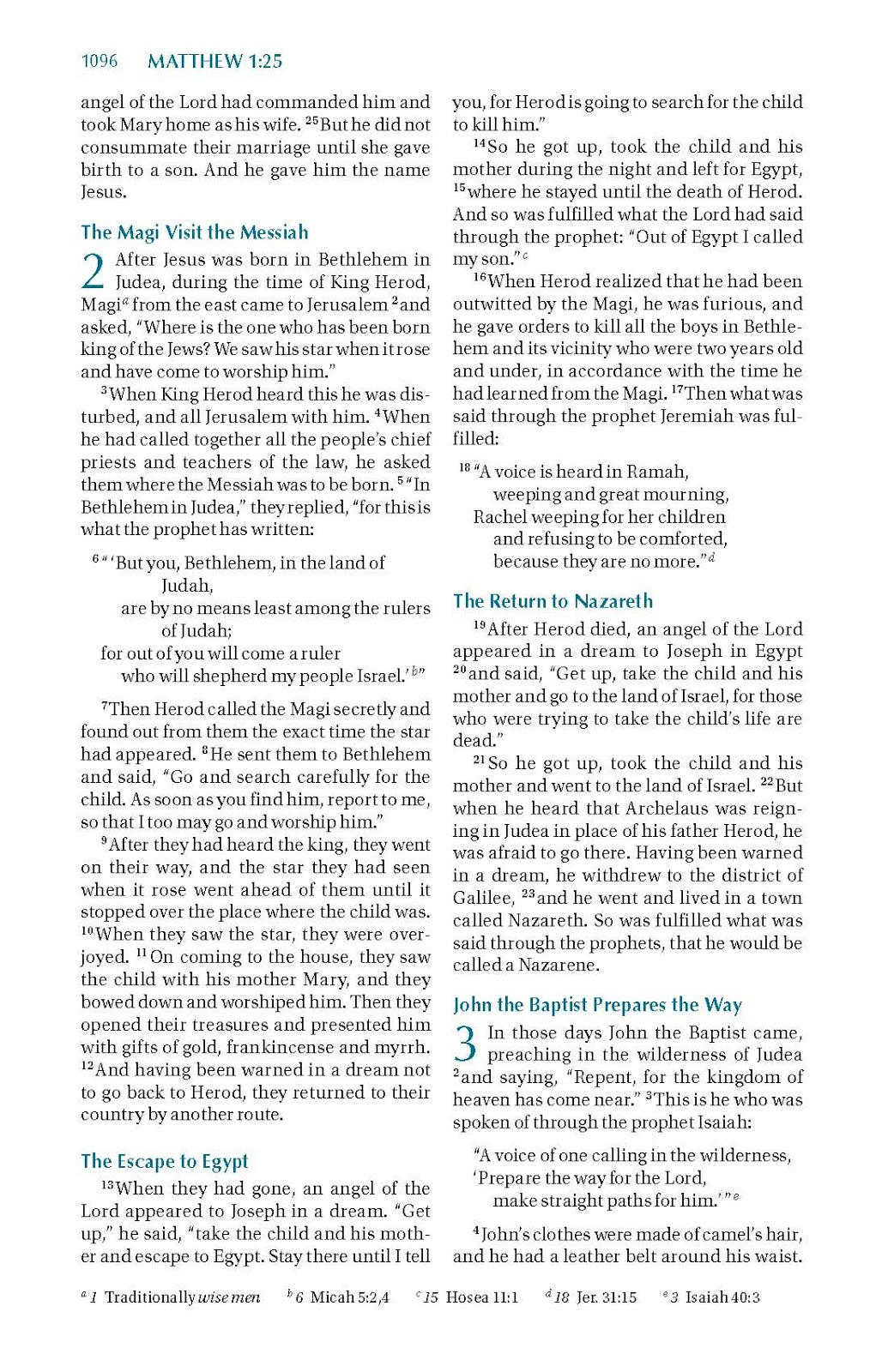
NIV Real Life Devotional Bible for Women, Insights for Everyday Life Notes by Lysa TerKeurst

Pros: 
Beautiful cover, layout and artwork.
Hardbound format.
Font size, type and color that is not only easy to read but also draws you into the pages.
I love the way the devotions are built into reading the Bible through in a year program. I always read the Bible through every year and this keeps it alive and fresh.

Cons:
It isn't available in my preferred version, KJV. I will probably use the devotional alongside my King James.


It is time for a FIRST Wild Card Tour book review! If you wish to join the FIRST blog alliance, just click the button. We are a group of reviewers who tour Christian books. A Wild Card post includes a brief bio of the author and a full chapter from each book toured. The reason it is called a FIRST Wild Card Tour is that you never know if the book will be fiction, non~fiction, for young, or for old...or for somewhere in between! Enjoy your free peek into the book!

You never know when I might play a wild card on you!


Today's Wild Card Insight Notes author is:


and the book:

Zondervan; Special edition (March 19, 2013)

***Special thanks to Rick Roberson for sending me a review copy.***

ABOUT THE AUTHOR:


Lysa TerKeurst is a New York Times bestselling author and national speaker who helps everyday women live an adventure of faith. She is the president of Proverbs 31 Ministries, author of 15 books, and encourages nearly 500,000 women worldwide through a daily online devotional. Her remarkable life story has captured audiences across America, including appearances on Oprah and Good Morning America. She lives in North Carolina with her husband and five children.

Visit the author's website.


SHORT BOOK DESCRIPTION:

This Bible will help you live up to your God-given potential. Insightful daily devotions written by the women at Proverbs 31 Ministries help you maintain life's balance in spite of today's hectic pace. Dive into the beauty and clarity of the NIV Bible text paired with daily devotions crafted by women just like you---women who want to live authentically and fully grounded in the Word of God.


Product Details:
List Price: $34.99
Hardcover: 1536 pages
Publisher: Zondervan; Special edition (March 19, 2013)
Language: English
ISBN-10: 0310439361
ISBN-13: 978-0310439363


AND NOW...SOME SAMPLE PAGES (CLICK ON PAGES TO ENLARGE):


Friday, May 3, 2013

When God Makes Lemonade by Don Jacobson

From a personal "lemon to lemonade" story of the author, to the stories of miraculous healing, from the physical to the spiritual, When God Makes Lemonade is full of amazing true (and a few fiction) stories that are amazing, inspiring and encouraging. Recommended for anyone in need of a spiritual "lift".

It is time for a FIRST Wild Card Tour book review! If you wish to join the FIRST blog alliance, just click the button. We are a group of reviewers who tour Christian books. A Wild Card post includes a brief bio of the author and a full chapter from each book toured. The reason it is called a FIRST Wild Card Tour is that you never know if the book will be fiction, non~fiction, for young, or for old...or for somewhere in between! Enjoy your free peek into the book!

You never know when I might play a wild card on you!


Today's Wild Card author is:


and the book:

Thomas Nelson (April 9, 2013)

***Special thanks to Rick Roberson for sending me a review copy.***

ABOUT THE AUTHOR:


Don Jacobson thinks of himself as a walking, talking lemonade story and he has good reason. After being severely injured in a hunting accident in 1980, he not only defied all the medical odds against him, but also marveled at how God used the sourest of circumstances to give him a wonderfully sweet and refreshing new life.

At the age of 24, while alone on an impromptu hunting trip and in no more than the span of time necessary for a shotgun blast, Jacobson's world was turned upside down. In a single instant, his life became lemon-filled. "It took a while for God to change lemons into lemonade," Jacobson now admits, "but in the end it was wonderfully sweet."

In the 25-year interim since the accident, Jacobson has worked tirelessly, first serving as president and owner of Multnomah Publishers, where he oversaw the production of more than one-thousand titles and the sale of more than 100 million books before selling Multnomah to Random House in 2006. More recently, he founded D.C. Jacobson & Associates (DCJA), an author management company, so that he might be able to continue working closely with authors.

Today Jacobson and Brenda, his wife of thirty-five years, live in Portland, Oregon, where they both love sharing their lemonade stories and hearing or reading those of others in return. The couple has four amazing adult children, three of whom are married to equally amazing spouses.


Visit the author's website.

SHORT BOOK DESCRIPTION:


Do you know someone who needs some encouragement?  Perhaps that someone is you.

In When God Makes Lemonade, author Don Jacobson has collected real-life stories from around the world that show everyday folks discovering unexpected sweetness in the midst of sour circumstances.  Some are funny, others are sobering, and more than a few will bring tears of amazement.  But these true stories all have one thing in common: hope.

There's no question that life gives us "lemons," like issues with health, employment, and relationships.  But when those lemons become lemonade, it's as refreshing as a cold drink on a hot summer day.

It's true that in life "stuff" happens, but as you'll see in these stories, Lemonade Happens too!


Product Details:
List Price: $15.99

Paperback: 368 pages
Publisher: Thomas Nelson (April 9, 2013)
Language: English
ISBN-10: 0849964709
ISBN-13: 978-0849964701


AND NOW...THE FIRST CHAPTER:


Roslyn Lake

Don Jacobson


It’s a chilly day in late November, and the clouds are hanging low over the Cascade Mountains. The woods where I am hunting around Roslyn Lake are thick and wild, just like the forest in Canada where I grew up.


Trekking around the boundary of the water, I think back to the endless hours I spent fishing, hunting, and camping as a kid. Some of my friends wanted to fly into space, others dreamed of catching touchdowns in the Super Bowl, but I just wanted to be outside, breathing fresh air, living with a little dirt beneath my nails. I was captivated with the outdoors, so after high school I joined a logging crew. Then I got into construction. The specifics of the job didn’t really matter; as long as I had the sun on my skin, I was a happy man.


I circle the lake, making sure to keep quiet. I don’t want to scare the ducks, but Big Boy, my rambunctious black lab, whines behind me and plunges into the water.


“Big Boy, quiet!” I whisper sharply. He splashes out of the lake and shakes his fur dry. A few more steps and I hear a pair of mallards on the shore behind a thicket of weeds. I freeze. Big Boy stops behind me and whines; the ducks fall silent.


He keeps whimpering, and I know he will scare the ducks away, so I grip the barrel of my shotgun like a tennis racket and swing behind me.

“Quiet,” I say, as the butt of my gun whacks Big Boy’s flank.


Suddenly a deafening burst shatters the stillness, and I’m violently spun around. I tumble into the water and crash, face-first, into the shallows of the lake.


Desperately I gasp for air and try to sit up, but an intense burst of pain thrusts me back into the water. I roll over onto my back and spit the water out of my mouth.


Breathe, breathe, breathe, I say to myself, my ears ringing and my mind scattered.


What was that? There was a noise. Something hit me. I’m hurt.


I look up into the dark, gray clouds, and the unthinkable hovers over me,


God, I shot myself.


* * * * *

“Don!” I hear my buddy shout my name.


I lean over, lay the Sheetrock against the wall, and turn around.


“Phone!” he says, holding it up into the air. “It’s your wife!”


I walk across the dusty floor and pull the glove from my hand one finger at a time.


“Hey babe, how are you?” I ask, pressing the phone up to my ear.


“Doing great. How’s work today?”


“Not bad, we’re moving along really well. Should finish on schedule.”


“That’s great,” she says, “I just wanted to remind you that Eric and Jeri will be here at 6:30.”


“Yep, can’t wait. Need me to pick anything up at the store?”


“Nope, we’re all set. I’ll see you soon?”


“Yep. I love you.”


“I love you too.”


“Oh wait,” I hear her say, loudly, as I lower the phone. I raise it back up.


“Yeah?”


“I almost forgot. The gunsmith called, and he said your shotgun is ready and you can pick it up anytime.”


“Really? That’s great. I’ll stop and get it on the way home.”


“Just don’t be late!”


I smile, picturing her shouting the words into the phone.


“Don’t worry, I’ll be there!”


A few hours later I take off early from work and run by the gunsmith. I tuck the stock up firm against my shoulder, look down the barrel, and follow a pair of imaginary ducks across the room.


“Feels good.”


The gunsmith leans on the counter, nodding in agreement. I pay him his fee, jump in my car, and head home.


When I pull into the driveway I check my watch.


I have a few hours until Eric and Jeri show up. Brenda is out running errands. Maybe I have time to try out the gun?


I check my watch one more time, think it through, and head into the garage. I stuff my pockets with shotgun shells, grab a coat, and whistle for Big Boy to jump into the car.


Should I leave a note for Brenda? I ask myself as I pull out of the driveway. Ah, it’s okay. I’ll be home in time.

* * * * *


I run my trembling hand up my right leg and stop when I reach a large, numb knot over my hip. The pain presses deeper into my side, through my gut, and down to my spine.


Oh Lord, I pray, feeling the damage with my fingers, I’m going to need your help on this one.


I look back to the shore and see the stock of my gun resting in the water. Reaching out, I pull it back, close to my chest, and realize the stock is dangling from the double barrel.


Something malfunctioned. It’s broken, I think to myself, sure that I’ve never seen a gun come apart like this.


I examine the damage and discover if I’m going to fire an SOS shot, I’ll have to rip the stock from the barrels; so I grab the barrels in my right hand, the stock in the left, and snap it apart like a twig. The stock comes off easily, and I drop it into the water. Then I spread my fingers into my pockets, fish the shells from my wet jeans, and lay them on my stomach.


Holding the twin barrels in my left hand, I aim them to the sky and rest the bottom on a tree stump coming out of the water. I reach over with my right hand, load each barrel, and then rest my right index finger on the triggers.


Three shots for an SOS call, I remind myself. Then I count:


One, two, fire.


Boom.


One, two, fire.


Boom.


I quickly reach back to my chest with my right hand and grab another shell, but already I know I’m moving too slowly to fire a third shot in rhythm. Still, I fumble the shell into the barrel, and fire.


I listen for a moment, hoping for footsteps, or someone shouting, but there is nothing. I reload the gun and perform the same, agonizing task.


Please, I pray, each time I reload, please let there be someone nearby.


I fire sixteen shots and run out of shells. The forest is still quiet, empty. I drop the gun back into the water.


“Help!” I shout as loud as I can. “Can anybody hear me?”


I yell so loudly I lose my breath. I’m light-headed.


“Help! I’m hurt. Help!”


My voice echoes off the water into the woods. I try to remember if I passed any cars parked along the road on the way up or if there were any homes nearby, but I can’t. I’m alone, and I know it—no one can hear me, and nobody knows where I am. The fog resting over the treetops might as well descend and hide me forever.


My mind is hazy, losing hope, and slowly stumbling toward my only option.


If no one is coming I have to get out of here by myself. Get to the car.


I slowly roll onto my abdomen and brace my hands beneath me. Drawing my knees up one at a time, I push up and find my balance.


Okay, good, I encourage myself, wobbly with pain. Get going.


Gripping my wound with both hands, I shuffle my left foot forward through the water. Next I pull my right foot up, but a searing pain paralyzes my leg, and I stumble back into the lake.


I hesitate to try again, but the command compels me: get to the car. I roll over and brace myself on the muddy lake bottom. The pain stabs at my side, but with a deep breath I inch my hands forward, then follow with my knees. Another deep breath, and I crawl an inch further.


Ten minutes later I’m out of the water, crawling on hands and knees down the path toward my car when an intense surge of pain explodes in my chest. It pumps through my heart, burns down into my lungs, and my stomach turns over with nausea. I collapse, moaning, on the path.


God, I plead, if you’re going to take me home, do it quickly because it hurts.


Instantly the fire cools and relief washes through my body. I draw in a long breath and my muscles relax.


Thank you God, thank you! I continue to breathe, thanking God with each exhale, sensing him near, telling me, If you make it until morning, you’ll live.


The light is fading from the sky, and the clouds are reaching down, hiding the forest in fog. I try once more to crawl to the car, but after fifty feet I simply stop moving. I am utterly exhausted and losing blood. I simply cannot go on.


As the day’s last light leaks from the clouds, Big Boy prances up to me with a stick in his mouth and pokes me in the side. He whines, begging me for a game of fetch. I don’t react, and he keeps pushing the stick into my wound.


God, he is going to kill me.


“Big Boy,” I manage to say, “no, boy. Lie down.”


Surprisingly, he obeys, and nestles up next to my cold body. I immediately feel the warmth from his body and once again sense God’s presence.


If you make it until morning, you’ll live.


Dusk slowly fades to black, and the woods grow ever quiet, tucked beneath a blanket of thick Oregon fog.


I start waiting, eyes open, for the break of dawn.

* * * * *


At 6:30 Eric and Jeri pull into our driveway as scheduled, and Brenda welcomes them by herself, excusing me for being late.


Eric, my longtime friend, asks Brenda where I am.


“I’m not sure, but if he doesn’t get here soon he isn’t going to find out who shot J.R.!” replies Brenda, half joking, half concerned.


They eat, clear the dishes, and turn on the TV, but I still haven’t arrived.


“I’m going to call my dad,” Brenda says right before Dallas starts. “Maybe he’s heard from Don.”


“No, sorry, haven’t heard from him,” her father, John, says, “but I wouldn’t be too worried. He has some old tires on that car. Maybe one went flat.”


“I don’t know, Dad. I’m worried. I want to call the police,” Brenda says.


“No, that won’t help. They can’t do anything now. Just wait until after the show. If he’s still not home, call me back.”


“Okay,” Brenda relents. “Thanks, Dad.”


After Dallas is over, Brenda gets back on the phone.


“Dad, he still isn’t home. I have a bad feeling.”


“I don’t know what to tell you. The police still can’t help because he’s only been missing a few hours. I’ll call if I hear anything.”


They hang up, and Brenda sits back down with Eric and Jeri.


“I don’t know what to do,” she confesses. “Where is he?”


Anxious hours pass, and finally, just after 11:00 p.m., the phone rings. Brenda rushes to the receiver and picks it up.


“Hello? Don?”


“No sweetheart, it’s me.” Her father is calling back. “Your brother just got home and said Don called him this afternoon about hunting.”


“Hunting?” Brenda asks.


“Yeah, he said Don called and wanted to go try the new stock on his gun. We are going to look for him now. You stay home and wait by the phone.”


“Dad, I can’t stay home. I have to look too.”


He sighs, and Brenda can hear him thinking on the other end of the line.


Where do I send her? John wonders to himself. He knows it’s important to have as many people out searching as possible, but he can’t send his daughter into the woods with the risk of finding her dead husband. The trauma would be too great.


“Okay,” he finally says, deciding to send Brenda to the least likely hunting spot he can imagine. “You go with Eric and Jeri up to Roslyn Lake; he might be up there.”

* * * * *

“I don’t know why we are looking here. It feels like we are wasting time,” Brenda laments. They have been driving around for over an hour, taking wrong turns, getting lost in the fog, growing frustrated. It is long past midnight, and they have yet to reach Roslyn Lake.


Slowly, Eric steers the car around a bend in the asphalt road and sees something glimmer in the darkness. He slams on the brakes and shouts, “What is that?” as he looks intently in the rearview mirror.


Brenda turns and recognizes it instantly. “It’s Don’s car! The fog is so thick we drove right past it!”


They leap out into the cold and check my car.


“He hasn’t been here recently,” Eric says, feeling his hand to the cold hood. Together, they walk out onto the man-made dike at the end of the lake.


“Don!” Eric shouts. “Can you hear me?”


I open my eyes. Big Boy’s warm body is still against me, keeping me warm, and his ears are up. He whimpers, looking into the dark.


I can hear something.


“Don!”


It’s faint, but I hear it. Is it real? Am I dreaming? I close my eyes and lean forward. I try to listen to every sound in the forest.


“Don!”


I snap my eyes open and turn my head toward the scream.


They found me.


“I’m here!” I try to shout, but my voice is too dry to speak. I swallow, but my tongue sticks to the roof of my mouth.

Water! Find water!


I look to the lake. Can I crawl down and drink in time? I keep looking, desperate, and see the glimmer of dew on my parka sleeve. Quickly I suck the moisture from the fabric and shout, “I’m here!” I gasp and swallow. “I’m here!”


Eric throws his hands up. “Wait, did you hear that?”


Brenda and Jeri shake their heads.


“Listen,” Eric whispers. A quiet moment passes. “There!” he erupts. “Did you hear that?”


“No!” Brenda says. “What is it?”


“Go wait in the car. I’m going to check it out.” Eric runs down the dike and turns into the forest.


I hear someone coming through the woods, and Big Boy starts barking. Again I feebly try to shout, “I’m here!”


Please, Lord, please let him see me.


On cue Eric steps through the mist and kneels down beside me. “Oh, thank God! Don, what did you do?”

“Eric? Is that you?” I ask, my voice scratchy.


“Yes, Don, it’s me. What are you doing here?” He kneels down next to me. “What happened?”


“I shot myself. It was an accident. How did you find me?”


“Everyone is out driving around.”


“Brenda,” I stammer, “is she here?”


“She is in the car . . . You stay here, and I’ll go get help.” He stands to run back to the car, but I stop him.


“No, Eric, I can walk. Get me up.”


He helps me to my feet. Leaning heavily on his shoulder, I try to step, but everything starts spinning. I collapse, and without hesitating, Eric dashes off into the dark.


“Don’t move! I’ll get help!” he says as he disappears.


Brenda and Jeri are startled when Eric opens the car door.


“What happened?” cries Brenda.

“I found Don. He’s okay, but he shot himself. We have to find a phone.”


Rushing up to the first farmhouse they find, Eric and Brenda pound on the door. A light flickers on, and a young man shuffles to the door.


“Sorry to bother you, sir,” Eric greets him, “but we need to call an ambulance.”


Within the hour I’m surrounded by several members of the Sandy, Oregon, volunteer fire department. The paramedics check my vitals and discover my heart rate and body temperature are dangerously low. I am nearly hypothermic, and my veins have collapsed, keeping the medics from inserting an IV.


They call in another ambulance equipped with inflatable pants, and when they arrive, they strap the pants on my legs, fill them with air, and push the blood back up into my vital organs. Finally, they are able to insert an IV and transport me, but they don’t load me into the ambulance. Instead, they call dispatch and request a medevac.


“Stupid idea calling in the helicopter,” Brenda overhears a police officer say. “They’ll never land it in this fog.”


But a few minutes later, with the air ambulance on its way, the fog pushes back just enough to reveal the night sky. The chop of the rotors starts echoing through the dark surrounding hills, and the helicopter sets down safely.


Eight minutes later, just before we arrive at the hospital landing pad in Gresham, the fog once again peels away for the pilot to land gently on the helipad. As soon as I am wheeled from the helicopter, the fog rolls back in and grounds the flight crew for several hours.


As I’m being pushed down the hospital hallway, the fluorescent lights blurry overhead, a nurse leans down.


“Don, I have some good news for you. Dr. Brose is on call tonight. He’s one of the best trauma surgeons in the city.”


I force a faint smile, and they wheel me to the emergency operating room. People are everywhere, rushing around me, rolling machines across the room, prepping me for surgery.

* * * * *


I survived the three hour-long operation, but Dr. Brose was worried about gas gangrene, so he moved me to a hyperbaric chamber at Providence Portland Medical Center. He told Brenda I’d never walk again, and if I lived, I’d have a colostomy for the rest of my life.


On my eighth day of recovery, Eric came to visit me. His face was long and sad, but we exchanged tired smiles.


“How are you liking ICU?” he asked.

“What do you mean?” I replied, looking at him, confused. “I’m in ICU?”


The smile faded from his face. “You’ve been in critical condition for eight days. You didn’t know?”


“No.” I tried to shake my head. “I just thought I was in the hospital.”


I thought, quietly, for a moment, but my mind was still hazy and scattered. “Are people worried about me?”


He nodded slowly, up and down, and his lips barely parted. “Everyone.”


“Don’t,” I told him confidently. “God showed me the night I was shot that if I lived until morning, I’d make it. Tell everyone I’ll be okay.”


The very next day I was moved from the ICU to a regular hospital room. As the slow, painful days of recovery turned to weeks and months, it became clear I was not only going to live but would enjoy a full recovery.


Thirty-two years later I’m not only walking without a colostomy; I’m still hiking the hills of Central Oregon, wrestling with my kids, and whipping friends at table tennis.


I can say confidently I would not be here if not for Dr. Brose. Because of his unique training in Central Africa, treating trauma victims, he was equipped to save my life. I can also say my rambunctious dog saved my life, lying down beside me, giving me his warmth. My wife’s intuition to call her dad and demand to join the search also saved my life. As did Eric’s keen eyes and ears. And the water on the sleeve of my jacket. Paramedics, pilots, a farmer—they all saved my life.


Even the gunshot saved my life. Despite the close range, the blast failed to create an exit wound; and a month after I was discharged from the hospital, the doctor pulled sixteen pellets from my back, millimeters from the surface of my skin. Had even one BB escaped during the incident, I would have bled to death in the forest. Instead, the mass of lead stuck in my abdomen, tore away muscles, nicked one kidney, and damaged my liver. I later discovered that the intense pain in my chest as I crawled to my car was caused by a BB flowing through the chambers of my heart before depositing in my left lung.


I have often wondered, what stopped the shotgun blast from killing me instantly? And what blew back the fog at the exact right time for the helicopter to land? And whose voice spoke Big Boy into obedience? Who could have planned such an elaborate rescue?


Was it the hand of God? The breath of God? The voice of God? The rescue of God?


I believe so, not just because I survived but because I was transformed.


The accident didn’t just cause the physical pain of a gunshot, traumatic surgery, and slow recovery. It also wounded my soul.


After the accident I spent many sleepless nights, asking God how I was supposed to provide for my family with a crippled body. And if I really couldn’t work doing manual labor, what job would ever give me the satisfaction of working outside with my hands?


I was disoriented and depressed, thankful to be alive yet confused as to what my life was all about. I’d always been the strong guy with calloused hands and flannel shirts. It wasn’t just a job, it was who I was—my very identity. I couldn’t imagine being anyone else. As I grappled with the emotional loss, my father-in-law came to visit.


“Don, all your life you’ve used your body,” he said. “Now God is giving you the opportunity to use your mind.”


Initially I felt his timing to be insensitive, and I was offended that he would trivialize my desire to make a living with my hands. But with time and prayer, I came to see he was right—God had forcefully yet tenderly cleared a new path for me to walk.


I returned to school at Multnomah Bible College, and after graduation I took a job in the publishing industry, where over the past two and a half decades I have experienced the unexpected joy of working with some of the wisest, most encouraging authors in the world. Their friendships have blessed me, given me hope, and taught me to believe in the miraculous power of story—even my own.


All those years ago at Roslyn Lake, I never would have asked for a cross-threaded screw in my gun, but it is the story I was given, and I now can thank God for that malfunction. It started me on a journey that has led me here, to God Makes Lemonade, to share the truth I’ve learned over and over. God can, and does, use life’s worst moments to invite us into life’s greatest blessings.


It is the truth written into my story, the real-life stories collected in this edition, and the greatest story of all: God’s. My prayer is that with a little hope, courage, and time, you, too, will begin to sense God at work, crafting your life into a beautiful story of redemption.

Wednesday, May 1, 2013

Madeline's Protector by Vanessa Riley

This novel is a fast-moving christian/adventure/romance story. The characters are well-developed and well-rounded. Ms. Riley captures all the glory (and gory) of early-Victorian England. Costumes, customs and munitions of the period are thoroughly and accurately described.

Pros: Accurately and beautifully described the era in which our hero and heroine live. No "dragging" spots.

Cons: The aforementioned hero and heroine have a very sensual relationship (after they are married); a young single girl doesn't need to read this.

It is time for a FIRST Wild Card Tour book review! If you wish to join the FIRST blog alliance, just click the button. We are a group of reviewers who tour Christian books. A Wild Card post includes a brief bio of the author and a full chapter from each book toured. The reason it is called a FIRST Wild Card Tour is that you never know if the book will be fiction, non~fiction, for young, or for old...or for somewhere in between! Enjoy your free peek into the book!

You never know when I might play a wild card on you!


Today's Wild Card author is:


and the book:

White Rose Publishing (April 19, 2013)

***Special thanks to Tyora Moody for sending me a review copy.***

ABOUT THE AUTHOR:

The Regency and Victorian eras have always been a magnetizing draw for Vanessa Riley. Even as she worked to complete her doctorate in Mechanical Engineering, she made time for renaissance fairs and any novel or cinematographic work depicting these genteel societies of old. Perhaps, the attraction arises from the kinship she feels with the period being brought up in the restrictive Southern Bible Belt with its stringent definitions of decent behavior and life expectations. Perhaps the common dominator to this appeal is her own thirty day Christian courtship or even the arranged marriages of her uncles; each is emblematic of the nuptials of those earlier times.

A technology muse like Dr. Vanessa Riley is probably not the immediate choice to write about haute ton English society set in the 1800′s. With her most recent published work being “Reducing Deformation by Phase Manipulation,” the common visceral reaction is that Providence has given another mule a voice to tell His story. Nevertheless, this mule uses her determined spirit and dogmatic tenacity to master the subject and to discover the hidden nuances of a character making him believable, her human and both ready to be used of God.

Vanessa holds a doctorate in mechanical engineering and a masters in industrial engineering and engineering management from Stanford University. She also earned BS and MS in mechanical engineering from Penn State University. She has been a radio anchorwoman and church announcer. She is a member of the American Christian Fiction Writers Association and Romance Writers of America.

Today, Vanessa juggles mothering a eight year old, her seventeenth wedding anniversary, engineering, writing and speaking at women’s events. She is known for her humorous delivery of poignant truths. Vanessa is currently, editor in chief of an online social network, www.busymama.net.

Visit the author's website.


SHORT BOOK DESCRIPTION:

If all the young men of England leapt off a cliff, Madeline St. James wouldn’t care. Then she’d have peace. Her nightmares of courtship would end, and she’d cozy up with a Psalm in her aunt’s quiet sculpture garden.

Yet, a chance meeting and a bullet wound change everything, and Madeline must trust the Good Shepherd has led her to the altar to marry a dashing stranger, Lord Devonshire.
Death and pain are no strangers to Justain Delveaux, Lord Devonshire, and he vows his dutiful bride will be kept safe and in her place. Though this compromised marriage is in-name-only, his wife and her unwavering faith both intrigue and allure him. Perchance when he thwarts his brother’s killer, Justain will tempt the unpredictable Madeline with the comfort of his arms.

But can Madeline and the stubborn earl forge a true bond before the next disaster strikes?


Product Details:
List Price: $16.99
Paperback: 354 pages
Publisher: White Rose Publishing (April 19, 2013)
Language: English
ISBN-10: 1611162262
ISBN-13: 978-1611162264


AND NOW...THE FIRST CHAPTER:


Shropshire, England, Iron Country, August 5, 1821
"Stop, thief!" Madeline St. James grabbed the coarse sleeve of the man who stole her guineas, but he shook free and dashed away.
"Give those back, this instant." Mouth open, pulse racing, she stopped her pursuit. A scream bubbled in the pit of her stomach, but she pursed her lips. A St. James never made a public scene or conceded defeat.
The thief reached the other side of the vacant courtyard, well ahead of a wagon rumbling up the cobblestone lane. He shot her a toothless grin and traipsed to the main building of Tilford Coaching Inn.
The dray and its lumbering horse team swerved closer, but if she waited one more second, the thief would escape her view. Another man would've taken advantage of her. Not again.
Picking up her weighty skirts, she sprinted onto the slick rocks of the road. The silver hem of her long carriage dress slapped at the mud. Better to be dirty than a victim. Cupping her palm to her eyes, she scanned for the thief.
The man bounded up the stone entree. He'd vanish like her driver, amongst the sea of gaming travellers.
She lengthened her stride to intercept him.
One high step too many, her boot heel caught in the sagging silk, tripping her. The air pushed from her lungs as she fell flat. The soggy earth saturated her layers to the shift and petticoat. Her injured elbow stung anew.

Wheels squealed. Hooves clomped the cobbles. Soon the horses would be on top of her, stomping and kicking.
A couple of tugs and yanks couldn't fish her boot free. No escape this time. Abba Fatherforgive. She turned her head and braced for the onslaught.
A band of iron gripped her stomach and hauled her from the muck. She went limp, sprawled against the hard chest of a rescuer. He pulled her off the lane and under one of the overhanging galleries of the inn.
Wind slapped her cheek as the horses swept past. No one held the reins. The wagon swung wide, crashed into the inn's main building, and flipped to the ground. Ejected barrels hit the whitewashed wall and sprayed foamy liquid.
Madeline's breath came in heaves, and she clutched the titan arm sheltering her. No fainting. No need to lose more dignity.
One of the draught horses loosed from its tether and galloped to the emerald pines scalloping the surrounding hills. The other roan remained with the wreck, lifting its crooked leg. Poor lame creature.
An old man rushed out of the inn and cut at the horse's strap. "Bring my gun. This one needs to be put down."
With an awkward hold on her middle, her rescuer spun her, perhaps to keep her from seeing the cruelty. He needn't be concerned.
The past two weeks had numbed her to violence. Yet, God kept her as He did again today. "Thank you,

Providence/ but please…spare the roan."
"You're welcome, but it's Devonshire, Lord Devonshire." The low voice kissed her ear, heated the pulsing vein along her throat.
How could this man sound calm? They both could've died.
He flung open the door to an onyx carriage and eased her onto the floorboards. "Are you injured, miss?"
"No." She rubbed her arms and gazed at her rescuer. He was very tall, enough to make her feel dainty even at her Amazon height. With broad shoulders and a solid chin, she couldn't have sculpted a more perfect hero. "The horse, sir? Can you help it?"
"Stay put. This mere mortal will see what can be done." He grabbed his top hat from the seat and marched away. His elegant form, straight posture, disappeared into the growing crowd.
It didn't matter she sat on the floor, chilled in her clothes, imposing demands of a stranger. Even against this errant horse, Death shouldn't win. She'd seen its victories too often, with Mama's passing seven years ago and Cousin Thomas dying this past spring.
She squeezed her throbbing elbow. Falling aggravated the sprain.
A quick shake of her foot didn't release her trapped kid boot but tore the lace trim on her gown, Mama's carriage dress. A lump formed in Madeline's throat. She missed Mama so much.
A few choice words shouted from the crowd and a round of loud snickers interrupted her woolgathering.
Lord Devonshire returned and rubbed the scruff of his neck. "It cost three guineas, but your nag will be kept by the innkeeper's daughter."

"I'll repay you, sir. My abigail has my reticule." She swallowed gall. The thief took most of her money, but surely three coins were left.
He waved his hand. "I'd rather not be a paid fool." Leaning along the door, he stared at her with irises bluer than a summer day.
What could Lord Devonshire learn from her disheveled appearance? She didn't mind his gaze. Since travelling to Shropshire, grey ash painted the clouds, no doubt from the ore foundries. No sunny skies like Hampshire.
"Now to be of true assistance." He reached under her hem, gripped above her ankle, and freed her boot from the tangle of silk. The warmth arising from his gloved hands seared her thin stockings. "Not broken." He released her foot to dangle through the entrance.
Shocking and bold. Though dressed as a gentleman in buff buckskins and an azure tailcoat, this definitely wasn't someone with whom to be alone.
Her wits returned, and she bounced out of the carriage. "I'll get your payment."
"Wait." Deep and commanding like Father's voice, his words stopped her. "I saw you trip trailing the miner."
She pivoted and clasped her hands across her ruined pelisse. Mud covered the delicate puce rosettes embroidered on the bodice.
"You were very brave to run after him."
"Bacon-brained would be a more apt description." A raindrop splashed her forehead. Her bonnet must have fallen in the commotion. She wiped her brow. The cold balm of mud smoothed against her skin. Her heart sunk, and she wrenched off her soiled gloves. If her cheeks weren't already scarlet, they should be.

He shortened the distance between them, a smile tugging at his full lips. "In mining country, the strikes have set everyone on edge. Some resort to crime. There's a would-be highwayman on every corner. You must take care around Tilford."
A fortnight ago, his concern might've warmed her, but not now.
"Father of Heav'n!" Mrs. Elsie Wilkins, Madeline's abigail, ran to her.
"Y' weren't to leave the livery." The good woman wrapped her stubby arms about Madeline's hips. "Too much for m' heart."
In vain, Madeline pushed at Mrs. Wilkins's indigo redingote to keep it from soiling, but no force could stop the woman's bear-like embrace.
Madeline's trampled bonnet peeked from the motherly woman's reticule. Dredged in dirt, the hat's ostrich plume lay crooked. Even in haste, her abigail took care of Madeline.
With another clench, Mrs. Wilkins finally let go. "Y' face?" She yanked from her pocket a crimson cloth and scrubbed Madeline's chin.
Madeline clasped her friend's wrist. "Dear, hand me my scarf. I'll do it."
Mrs. Wilkins shook her head and kept swatting the mud. She didn't want to come on this adventure, but how could Madeline be without her strongest ally? It must be the Irish blood bubbling in the abigail's veins, making her so loyal.
"First a broken wheel, now this." Mrs. Wilkins added a spit shine to Madeline's cheek then pivoted to Lord Devonshire. "The stable boys said ye saved her. Bless ye."
"I…I saw the lass fall in the path of the wagon. I

am the Earl of Devonshire. Very glad to be of assistance." An unreadable expression set on his countenance as he flicked a rain droplet from his sleeve. "Are there others in your party?"
"There's me--Mrs. Wilkins--and my lady, Miss Madeline St. James." She stretched on tiptoes and picked at Madeline's unraveling chignon, reseating pins and tucking tresses. "And m' lady's driver, but he disappeared, the no good lout."
Great. Mrs. Wilkins just confirmed they were alone. Now he'd be obliged to help. Indebted to a man. Could this day get any worse?
The earl rubbed his jaw. His gaze seemed locked on the colourful scarf.
Another drip from the overcast skies splattered and curled into the sable-brown hair peeking beneath Lord Devonshire's brim. He was too fine looking, too virile to be trusted. Step-mother's nephew, the handsome Mr. Kent, imparted that lesson before Madeline left home.
"Mrs. Wilkins, hand me my coins. I need to repay his lordship."
"No, miss. 'Tis my duty to escort you to your destination."
Madeline shook her head. "'Unnecessary."
"Cheshire. Please take us there." Mrs. Wilkins dabbed at her coat. "Like a divine appointm'nt, the earl being here."
"I can't speak for divinity, but you might say I've been waiting on a sign." He slipped the cloth from Mrs. Wilkins and waved it like a flag. "Someone brave to show me the way."
"I suppose we have no choice." Madeline snatched it from him with trembling fingers. She may be bacon

brained but not helpless or a plaything.
"There's always a choice. Like should I chase a scoundrel or let you freeze?"
She stilled her shaking palms.
He stepped near, removed his tailcoat, and draped it onto her shoulders. With his thick thumbs, he flipped the collar's revers to cradle her neck. His touch was gentle. "This should stop your shivers. I'll have my Mason get blankets."
Hugging herself beneath the weighty wool, Madeline gaped at Lord Devonshire. "Sir, we haven't agreed."
"The drizzle will get worse." He rotated to Mrs. Wilkins. "The young lady was just in my Berlin. Perhaps the visit was too short to attest to its comfort."
Trimmed in gold, the carriage could overshadow her father's. Either the earl possessed great wealth or liked the appearance of it. In her experience, both conditions made men pompous or cruel. She rubbed her elbow again.
Mrs. Wilkins curtsied. "My lord, we've two trunks in the stables with our brok'n carriage."
The earl nodded, opened the door to his Berlin, and then plodded the long lane toward the livery of the coaching inn. Was it confidence or arrogance squaring his shoulders?
He didn't pivot to check on them, not once. Arrogance.
"Come along, Lady Maddie. Don't get stubborn. Remember your plan."
Madeline raised her chin, grasped Mrs. Wilkins's forearm, and lumbered toward Lord Devonshire's carriage. "Another obstacle to peace."
Her friend's cheeks glowed. "The beginning of

peace, child. It's the beginning."
If only Mrs. Wilkins could be right. The unease in Madeline's spirit disagreed.
****
The temptation to look back almost overtook Justain Delveaux, the Earl of Devonshire. He strode faster to the livery. The girl had been spooked. If he seemed anxious, she'd run.
A fire of independence burned in her jade eyes. He'd have to placate Miss St. James and win her trust. Then she'd lead him to the killer.
At the entry of the hay-filled livery, his driver brushed Athena, Justain's filly. "Sir, are you ready to give up? The informant isn't going to show."
Justain stroked Athena's thick ebony coat, a shade lighter than Miss St. James's raven locks. "He didn't. She did. Look behind me. Are ladies entering my Berlin?"
Mason squinted. "Yes."
"The young one possesses the red cloth signal. She's the informant."
Furrowing his brows, Mason shrugged. "You and your jokes, sir."
"I'm serious. We're taking them to Cheshire, probably a clandestine meeting. Never thought to look for a woman. Well, not for an informant. The lass will lead me to lynch--"
"Must you wax poetic?" Mason chortled. "Genteel women shouldn't be left here/ but…"
"Just say it."
"We need to leave, sir. Something's afoot." Mason wiped water from the brim of his tricorn. "The miners

say a blood vengeance rides tonight."
"We'll leave soon, with my new acquaintances." Why was Mason hedging his words? Since Justain was knee-high, the man never held his tongue.
Rain fell in buckets. Justain moved under the stable's roof.
Mason and Athena followed. He searched his blue-black flap coat and retrieved his treasured silver flask and Justain's bottle of tincture. "The filly's cut is sealed."
"Superb, but no more of this." Justain pocketed the tincture. "Put away your spirits and say your peace."
"This chase won't bring Lord Richard back." His driver's voice grated like a rebuke from the old man, Justain's father. "You've other things to contend."
Justain concentrated on the steady rhythm of the shower. It blocked the memory of Richard's last breath and Justain's mounting guilt. He was to blame for Richard dying. Nothing took precedence over avenging his brother.
"Send blankets to my guests. Have the stable grooms load Miss St. James's trunks." He trudged toward the Berlin. This couldn't be a fool's errand. He hated being a fool.
****
Madeline forced a smile at Lord Devonshire as he leapt into the Berlin. He sat in the opposing seat, tossed his sodden top hat and gloves onto the floorboards, then pushed wet hair from his face. The rain poured hard minutes after she and Mrs. Wilkins entered his carriage, and it hadn't lessened.
Seeing him soaked eased her slight agitation at him.

"Thank ye, for savin' m' mistress." Mrs. Wilkins snuggled into the corner of his carriage, her greying red curls rested upon the creamy silk lining the walls. "Ye gen'rous to escort us to Cheshire." She yawned then winked at Madeline. "So noble and so handsome."
Heat crept up Madeline's neck. She didn't need to be reminded of his looks or his bravery. "We are grateful."
"Be at ease. It's not often I play the hero these days." His sable-brown mop shadowed a lean nose and tanned cheeks. "The escapade gave me needed exercise."
At least, he remained humoured. Gratitude should weigh on her spirit, but was his deed happenstance or had he followed her? Miles and miles from Hampshire, and the feeling of being chased refused to quit.
A servant stuck his head inside the carriage. Rain drizzled down his uniform causing the braiding on his mantle to droop. "To Cheshire, my lord?"
Twisting a signet ring, Lord Devonshire glanced toward Madeline and Mrs. Wilkins and then turned to the opening. "Yes, Mason, I haven't changed my mind. My guests have gone to great lengths to find me. I shan't forsake them."
What? Why did the earl think she sought him? What tales men must feed each other.
"Yes, my lord." The frowning servant nodded and shut the heavy door.
Madeline smoothed her bodice, trying to calm the tickle in her stomach. Father told her every kindness held a price. She'd paid enough for trusting Mr. Kent. The pain from his blows to her side persisted.

"Lord Devonshire, we haven't departed. Pray help us hire a post chaise to ferry my abigail and me to my aunt?"
"No. I will see this through." He cleared his throat. "I look forward to our conversation."
Though the earl's countenance appeared pleasant with his lips curling, he fidgeted his wilted cravat. Dried, the neckcloth might've held a little height in a fashionable sense. Was he one of those pompous dandies? Her scarlet handkerchief did hold his interest.
No. If he were, the earl would've let Madeline die than risk wrinkles to his clothes. The parade of fortune hunters Step-mother marched through Avington Manor surely would've made no effort. The shrewish woman probably hoped the flock of peacocks supping at their home could convince Madeline to accept her nephew for a mate, a lesser of evils.
The carriage lurched forward. Lord Devonshire reclined as if he posed for a portrait. His steady gaze set upon her.
Did he want his jacket returned? Did her slipping bonnet offend him? She righted it and smoothed its bent feather. "May I at least reimburse the livery expenses for my carriage?"
"Keep your precious gold coins. 'Tis my honour to serve you, Miss St. James." He grinned. Smooth white teeth peeked. "The opportunity to pull a headstrong beauty from harm's way is something I relish."
"Would you let a thief abscond with your coins?"
His smile dissolved. "No. I protect what is mine, and I'll avenge what is stolen."
Few had the patience for her opinions. She rolled one of the silver buttons of his jacket along her thumb.
"Praise be unto Prov…" Mrs. Wilkins snorted a harsh noise, her chin bobbling in the throes of sleep. With a fold and a tuck, Madeline secured the dear woman's blanket then tugged a book from the abigail's reticule.

"You two are my first guests in this new coach." The earl's tone was low.
He needn't be concerned about awakening Mrs. Wilkins. After this harrowing day, wild elephants couldn't rouse her.
Slumping near the window, Madeline glanced at the retreating landscape, the evergreens reflecting in the puddles. She'd enjoy nature now, before they crossed the Severn Gorge. Seeing the bottomless chasm would rattle her frayed nerves. The last time, ten years ago, she took this route with her parents and had curled next to Mama and hid within the folds of her shawl. Abba Father, please allow each of my steps to be surefooted. Tell Mama I miss her.
Lord Devonshire inched closer. Though the carriage rocked with each clip-clop of the horse team, he didn't sway. His tall frame sat erect like a sleek marble sculpture. "Is there anything I can do to make you comfortable?"
Mrs. Wilkins's bonnet fell onto her lap, her snores bleating to an embarrassing high pitch. The symphony of snoots quieted, but not before one protracted trumpet.
"No, sir." Madeline's cheeks warmed. Explaining her hasty exodus from Avington would lower his opinion of her, not that she needed his good opinion.
Egad. Step-mother was right. Madeline did over think things. She yanked her bookmark, flipped a few pages, and tried to lose herself in the passage.
He rapped the book and lowered it. "You'll ruin your sight, reading all the way to Cheshire. At our next stop, I'll have a lantern set down, unless I can capture your interest."

Another opportunist. Yes, he'd saved her from being trampled, but he was still a man. Did they do anything but seek their own pleasures? Like Mr. Kent.
Kent's sibilant whispers turned to yells ringing in her ear. He threatened to kill her for refusing his proposal. What type of life would she have if she'd eloped with a man of such vile temperament? She shuddered. Shoving her novel in Kent's eye darkened it and helped her escape.
"Miss St. James? Are you well?"
"Yes." She glanced at her wet hero. "You must be cold. I should return this." She lifted the tailcoat an inch and an ache rippled along her elbow. She clenched her teeth and let the jacket fall back to her shoulders.
"Just damp." He whipped his sleeves, rustling ivory buttons. "You seem to favour your right arm. Did I injure you in our last embrace?"
"No…no/ my lord." Her breath hitched, and she sniffed an odour similar to fresh dye. It reeked. She huddled deeper in the tailcoat and swathed her nostrils. The mild fragrance of sandalwood lingered in Lord Devonshire's jacket. Peace reined in every storm, and this one smelled of safety, like her father's robes.
The earl shifted his boots hard onto the floor. "Some say confession is good for the soul. Do tell. Why were you at Tilford--a gaming den, no less?"
Madeline wobbled on the tufted cushion. "My carriage broke down. One usually has no choice where this happens."
"And your driver's missing? Such a fanciful story.

I love a quality Banbury." He folded his arms like a solicitor in the midst of an inquiry. "Are you running from or to someone?"
"To my aunt in Cheshire, Lady Cecil Glaston. She's to tour Italy with me." Well, it would be the plan once Madeline convinced the art patroness. Madeline intended to sculpt such a stirring picture, Aunt would be anxious to see Michelangelo's David and abandon holding a matchmaking season. After Mr. Kent's betrayal, Madeline wasn't ready to belong to any man.
"I think you are running from someone whose wrath you fear. Don't lose courage. So much trouble is wrought from silence." For one second, the earl's sky-blue pools seemed to ripple with hurt before he blinked them clear. "We mustn't allow this."
She squinted at Lord Devonshire. Could he know she'd kept quiet about Mr. Kent?
"Help me, Miss St. James, my brave lass?"
Madeline's heart responded to the plea, thundering within her ribs, but could she be of aid without inviting Kent's revenge?
Lord Devonshire reached for her hand. "Tell me your secret. My dear, you can trust me."


This is a work of fiction. Names, characters, places, and incidents either are the product of the author's imagination or are used fictitiously, and any resemblance to actual persons living or dead, business establishments, events, or locales, is entirely coincidental.


Madeline's Protector

COPYRIGHT 2012 by Vanessa Riley

All rights reserved. No part of this book may be used or reproduced in any manner whatsoever without written permission of the author or Pelican Ventures, LLC except in the case of brief quotations embodied in critical articles or reviews.

eBook editions are licensed for your personal enjoyment only. eBooks may not be re-sold, copied or given to other people. If you would like to share an eBook edition, please purchase an additional copy for each person you share it with.

Contact Information: titleadmin@pelicanbookgroup.com

Scripture quotations, unless otherwise indicated are taken from the King James translation, public domain.

Cover Art by Nicola Martinez

White Rose Publishing, a division of Pelican Ventures, LLC www.pelicanbookgroup.com PO Box 1738 *Aztec, NM * 87410

White Rose Publishing Circle and Rosebud logo is a trademark of Pelican Ventures, LLC

Publishing History First White Rose Edition, 2013 Print Edition ISBN 978-1-61116-226-4 Electronic Edition ISBN 978-1-61116-225-7
Published in the United States of America